Sunday, February 16, 2014

Is the Housing Tribunal effective?

Taken from:
http://www.thestar.com.my/Business/Business-News/2014/02/15/Is-the-Housing-Tribunal-effective/

Is the Housing Tribunal effective?
  
Tribunal award definitely no less superior than a court decision.
Scenario A: You want to file your claim at the Housing Tribunal? Aiyah, better not lah, waste of time only. My friend filed his claim two years ago. Until now, still cannot get his money. You better go to court.
Scenario B: But very expensive if go to court. The lawyer says my case must go to the magistrates’ court, and you know how much he wants to charge? RM5,000! On top of that, he says RM5,000 does not include filing fees and travelling. Worse still, he says he cannot guarantee I will get my money. Where I got money to pay the lawyer, the developer delayed my house for so long. I told the lawyer he can deduct from the money the developer has to pay me, but he says cannot. If the developer doesn’t pay I still have to pay his legal fees and expenses, he says. Where got justice?

I had just finished writing my last article (Damages for late delivery, Jan 25) in which I praised the Housing Tribunal for a job well done when I overheard the above conversation as I sat sipping coffee one Saturday morning.
Has my confidence in the Housing Tribunal been somehow, or somewhat, misplaced? I continued to wonder as I made my way to the National House Buyers Association (HBA) that Saturday for the weekly “Meet the Public” session.
What I was to hear that day were, sadly, more disheartening remarks about non-compliance of awards made by the Housing Tribunal against defaulting developers.
Has the Tribunal for Homebuyer Claims, commonly known as the Housing Tribunal, served its purpose or is it just a waste of time for house buyers?
The question is, perhaps, best answered by looking at the reasons why the tribunal was set up, and to do a simple comparison between the Housing Tribunal and the civil courts before looking at the issue of compliance.

A house buyer in despair
Let’s take a simple case of a house buyer who purchased a house from a housing developer at the price of RM200,000. Delivery of vacant possession is delayed for two years.
Under the sale and purchase agreement, the developer must pay liquidated damages amounting to RM40,000 for the delay. The house buyer is told to write in officially when he asks for payment. Dutifully, he does so, followed by several visits to the developers’ office, each time with the hope of seeing a cheque for RM40,000. Several letters follow, each less polite than the previous. Still there is no sign of any payment whatsoever. What is the house buyer to do?
David vs Goliath
Before the Housing Tribunal was set up 11 years ago, the only choice a house buyer had was to take the developer to court. Court proceedings were not just costly but extremely time-consuming, which, of course, suited the errant developers perfectly.
Many developers are known to have a battery of lawyers willing to go to court for them for free, in exchange for, or in the hope of, being placed on the developer’s panel for their projects. Developers were in no hurry to pay, and the legal system, with all its imperfections and eager-to-please lawyers, provided an excellent platform for irresponsible developers to buy time even in clear-cut cases against them. House buyers, most of whom had little or no resources at all, were easy victims to take advantage of.
I am well aware of cases taking not just months but years to dispose of, and I’ve had my fair share of crossing path with house buyers who settled for just a fraction of what they were entitled to because the legal case was taking too long and was too costly. Enforcing the judgement obtained was another matter. It was a sad but typical case of the strong verses the weak.
Housing Tribunal to the rescue
It was against such a depressing backdrop that in December 2002, parliament created the Housing Tribunal as an alternative platform for house buyers. It was to be an easy, cheap and speedy alternative forum for the ordinary people. Since it was to be a tribunal or “court” for the ordinary house buyers, numerous measures were taken to ensure that it was user-friendly and affordable, including a cap on filing fee at a nominal sum of RM10, thus keeping lawyers out.
Now, going back to our simple case above, how much would it cost the house buyer to obtain a judgement for the RM40,000?
RM10 for filing and some travelling and, perhaps, photocopying charges if he goes to the Housing Tribunal, compared with thousands of ringgit if he were to go to the magistrate’s court instead. Of course, cost is not the only issue, and I fully agree that a paper judgement is simply not worth the paper it is written on.
Let’s look at our example again, this time with our house buyer’s neighour in the picture for comparison. The house buyer goes to the Housing Tribunal and is given an order for the developer to pay him RM40,000. It costs him RM10, plus some travelling and photostating expenses. His neighbour decides to go to the magistrate’s court, pays his lawyers thousands of ringgit in legal fees and expenses and he too gets an order for RM40,000.

Court order vs tribunal award
What is the difference between the two orders? The one given by the magistrate’s court is often referred to as a “judgement” while the order from the Housing Tribunal is called an “award”.
Is the magistrate’s court judgement superior to the award from the Housing Tribunal? Definitely not, and this is because under the legislation (section 16AC(1)(b) of the Housing Development (Control and Licensing) Act, 1966 (HDA)), the Housing Tribunal’s award is deemed to be an order (in this case) of a magistrate’s/sessions court and can be enforced like a magistrate’s/sessions court judgement once it is registered at the relevant court of law. (Note: If the award is for RM50,000 – maximum monetary jurisdiction of the tribunal – or less, then it is deemed a judgement of the magistrate’s court).
In other words, the Housing Tribunal award is equivalent to (in this case) a magistrate’s court’s judgement.
In fact, one would not be wrong to say that an award made by the Housing Tribunal carries a lot more oomph because pursuant to section 16AD(1) of the HDA, whoever fails to comply with a Housing Tribunal award commits a criminal offence which is punishable with a fine not less than RM5,000 and exceeding RM10,000, or imprisonment not exceeding two years, or both.
In the case of a continuing offence, in addition to the above, the offender will also be liable to an additional fine not exceeding RM1,000 for each day or part of a day during which the offence continues after conviction.

How long does it take to get an award from the Housing Tribunal?
As far as I am aware, a house buyer is usually given a hearing date within a month of filing his/her claim. Pursuant to section 16Y(1) of the HDA, the Housing Tribunal is required to make its award without delay, and in any event within 60 days from the first hearing date, where practicable. Awards can even be given at the first hearing, if the papers are in order and duly served, and there are no legal complications or further investigations/inspection required.
The National House Buyers Association has, indeed, over the years been told of many cases whereby house buyers are given awards at the first hearing. What happens then if the developer refuses to pay? Unfortunately, both the house buyer and his neighbour will have to go for enforcement of the judgement/award to try and recover what is due from the developer.
Enforcement in both cases is done at the civil courts and includes proceedings such as attachment and seizure, judgement debtor summons and prohibitory orders. They can even resort to winding up the developer’s company. Whichever mode of enforcement they choose to proceed with, the lawyers treat it as separate from the work done in obtaining the judgement, and therefore, charge a separate fee for enforcement proceedings.
In conclusion, both the house buyer and his neighbour would have reached exactly the same stage, each armed with a judgement which is enforceable at the civil courts but one having already paid thousands of ringgit in legal fees and the other, next to nothing.

Chang Kim Loong is the honorary secretary-general of the National House Buyers Association (HBA): www.hba.org.my, a non-profit, non-governmental organisation manned purely by volunteers. He is also a NGO councillor at the Subang Jaya Municipal Council.

Wednesday, December 25, 2013

Study approved plan before buying house

http://www.starproperty.my/index.php/articles/property-news/study-approved-plan-before-buying-house/

Study approved plan before buying house
Buyers Beware By CHANG KIM LOONG
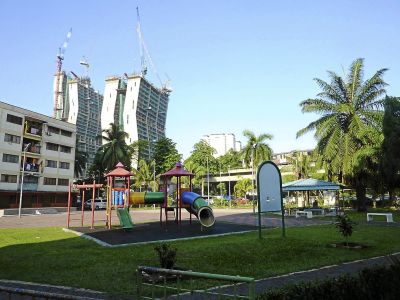
Provision of open and green spaces. The approval governs on how these open spaces allotted for the designated community activities such as playground for children, communal park, etc are to be used.
FIRST off is the regulation which is below.
It is mandated in the Preamble of Schedule G (landed property) of the standard sale and purchase agreement pursuant to Housing Development (Control and Licensing) Act 1966 and Housing Development (Control and Licensing) Regulations 1989, sub-regulation 11(1) that the vendor which is known as the “developer” to the masses has to provide as part of the legal documents, among others, the “approved” layout plan (to be annexed as the First Schedule) and approved building plan (to be annexed as the Second Schedule).
Similarly, Schedule H (Stratified Property) requires attachment of the “approved” 1: Site plan, 2: Layout plan, 3: Floor plan of the said parcel, 4: Storey plan of the said building (delineation of the said land comprising the said parcel), 5: Accessory parcel plan, and 6: Common facilities plan (to be collectively annexed as the First Schedule) and approved building plan (to be annexed as the Second Schedule).
This mandatory requirement has been entrenched within the Housing Development Regulations and the statutory sale and purchase agreement but has gone unnoticed by the regulatory body i.e. the Housing and Local Government Ministry and its enforcement agencies.
Why is it so important for these approved drawings to be made part of the contract obligation and condition?
There has been no shortage of complaints from the purchasers over the years on the deviations found in their end-products i.e. their completed unit of stratified apartment/condominium or landed residential house and their surrounding habitat from those represented in the sale brochure, flyers and even plans attached to the standard sale and purchase agreement signed between them and the developer.
The importance of these plans/drawings document are best described through the following scenarios.
·Development of open space/future development
Purchasers ought to be aware that modern living these days involves more than purchasing a piece of subdivided land/a piece of strata apartment/condominium in the air in a scheme. What one is actually purchasing is a concept of living style which apply to all ends of the market, from low, medium cost to the high notch end, which means its surrounding environments such as open parks/field, green lungs, community hall and clubhouse, i.e. all common property and facilities are actually an inseparable part of the neighbourhood you bought.
From time to time, you will read in the reported news that the purchasers/residents of a housing scheme taking the developer to task for developing some green lung/common open spaces which they deem to be their communal common property/spaces, something which the developer would contend otherwise and that these green open spaces are part of their land reserved for future development.
How can you tell whether the developer has the right to do so?
Just imagine a piece of green lungs – an open field – next to your house in which you do your daily jogging and which serves as a playground for your kids suddenly after a few years down the road make way for a towering condominium right at your door step! Not an uncommon sight in some housing scheme. Just imagine you pay extra RM10,000 premium for a fronting of a green lung (unintended for development) which subsequently turned up to be a retention pond, now infested with rodents, damped area ideal for mosquitoes breeding and occasional drain water ponding and smelly water discharge and slug.
This is when the approved layout plan annexed in the First Schedule will lend credence to the disputing arguments.
The layout plan (provided it’s an approved copy by the local authority) is the approved development proposal which contains, among others, the following vital information.
i) Density, in planning terms, refers to the number of houses or apartment units allowed to be constructed for a proposed development. For example, 60 units of apartment per acre has been approved for a scheme where such density quota has been used up, i.e. the exact unit of apartments per acre has been constructed. The developer is not allowed to build extra units even if there is ample land left in the scheme. The tabulation on the approved layout plan will be able to clarify the exact density and unit approved by the authority for development.
ii) Use of land and building. An approved plan will show the development mix approved by the local authority. When a scheme has been approved for a pure residential neighbourhood, for example, a developer is not allowed to build, say, an office block in an approved scheme of 50 units of semi-detached and 100 units of terrace houses without first applying and obtaining an approval from the authority for such a deviation.
Thus, a mix development comprising office towers, shophouses in a residential scheme will need to be tabled for the local authority approval before they can be developed and the same shall be required to be reflected in the approved plans.
iii) Provision of open and green spaces. The approval governs on how these open spaces allotted for the designated community activities such as playground for children, communal park and hall, places of religious worship … etc are to be used. Hence once these communal facilities such as an open park are designated for public use, they cannot be converted to say another block of condominium or office tower. Thus, the importance of the layout plan comes to bear.
By the same token, if these open spaces have been designated as the green lungs, communal park, hall and facilities and even utility reserves for roads, drains, water retention and electrical works, … etc, then it is prohibitive to be developed.
So, you should get inquisitive when you intend to buy a landed property next to a open land marked “future development” either in the brochure, architectural model and development plan of the scheme at the showroom if you want to avoid a condominium tower built right at your doorstep as the worst scenario illustrated above.
As your first line of your standard checking procedure, ask the sales staff for the approved layout plan from the relevant authority and that they ought to have no reason to turn down your request as such approval would have been obtained by now, or else they would not have been allowed to launch a sale, for such an approval forms part of the requisite condition for their sales permit. Why should such approved plans be shrouded with secrecy unless one has ulterior motives to hide?
These approved plans/drawings attached in the schedule must be a duplicate copy of the actual approved plan bearing the appropriate authority’s seal of approval normally in the form of a stamp. Stamp like “Di Luluskan oleh Majlis Perbandaran Subang Jaya” should be visibly available on the top right hand corner of each of such plans.
Then run through these approved plans against those represented in the advertised medium and your expectation to ensure indeed they are duly “approved” for the development you have been led to believe. This will allow you to make an informed decision.
You ought to practise the same checking steps for the same plans that shall be annexed in the first schedule of the sale and purchase agreement, before signing the contract. When in doubt, please check with your own appointed independent lawyer.
This is a two-part series and the second article will appear in my next “Buyers Beware” column.

l Chang Kim Loong is the honorary secretary-general of the National House Buyers Association: www.hba.org.my, a non-profit, non-governmental organisation (NGO) manned by volunteers. He is also a NGO councillor at the Subang Jaya Municipality Council.

Monday, November 25, 2013

RPGT won't hurt genuine buyers

http://www.thestar.com.my/Business/Business-News/2013/11/09/RPGT-wont-hurt-genuine-buyers.aspx
Published: Saturday November 9, 2013 MYT 12:00:00 AM 
Updated: Saturday November 9, 2013 MYT 9:50:24 PM

BY CHANG KIM LOONG


Banning DIBS is the right move
FOR many years, the National House Buyers Association (HBA) has been urging the Government to take measures to stem the steep rise in property prices to avoid a “homeless generation” as current property prices are far beyond the reach of many low and middle-income families in urban and suburban areas.
This is a ticking time bomb that will result in many social problems if left unchecked.
Real Property Gains Tax (RPGT)
The announcement of the revised rate of tax on gains made in the disposal of properties, namely, the Real Property Gains Tax (RPGT), formerly known as the Anti Speculation Act, under Budget 2014 is far more superior to what had been proposed under Budget 2013 (See table above)
This is because, typically, if the property is purchased directly from the developer, it takes two years (for landed properties) and three years (for strata properties) to be completed.
Hence, under the previous RPGT, speculators could purchase properties from property developers upon their launch and then flip these properties on completion (after two years) and having to pay 10% (i.e. within the 3rd to 5th year).
It is hoped that the revised RPGT rate will deter speculators and, at the same time, not punish genuine house buyers who buy for their own stay or long-term investment. It is worth noting that buyers of residential property could seek a once-in-a-lifetime exemption from the tax.
Budget 2014 is best described as an “excellent mathematical formula” to curb the unbridled escalation of house prices, which has in the last three years skyrocketed. The Government has taken a step in the right direction with measures to slow down the steep rise in property prices due to false demand caused by excessive speculation fuelled by easy housing loans and the previously low RPGT.
Foreign purchasers to pay more
HBA applauds the move to increase the minimum price of property that can be purchased by foreigners from RM500,000 to RM1mil. Foreigners must be prevented from “snapping up” property meant for the lower and middle income.
This artificially inflates prices and creates a domino effect which can result in higher property prices across the industry. This is especially true for development corridors such as Iskandar Malaysia which has seen foreign purchasers arriving in droves and scooping up properties with their advantageous exchange rate.
Banning the Developer Interest-Bearing Scheme (DIBS)
DIBS is popular with speculators as they pay nothing to make a profit. Their initial down-payments and deposits are sometimes factored into the purchase price by the collusive developers, and some unethical financial institutions do not even require that the developer collect the deposit that has to be paid by the so-called purchaser.
This is one of the factors which induces “bogus” house buyers (which I have written about in this column on Aug 31 entitled: Of Speculators and bogus house buyers) who merely flip the property at the right time.
Kudos to Bank Negara for heeding our call and banning DIBS. It may be worth noting that Singapore banned DIBS in 2009.
Considering the deep pockets of property speculators, the effectiveness of these measures remain to be seen. However, they are expected to make speculation unworthwhile. HBA praises the Prime Minister for putting a stop to DIBS, which is one of the reasons attributed to the steep increase in property prices for three reasons:
1. DIBS encourages speculation as the house buyer does not need to “service” any interest/instalment during the construction stage. This will “lure” and tempt many house buyers to speculate and buy into DIBS projects hoping to flip on completion and make a quick profit with little or no capital upfront. Connivingly, the interest element is “serviced” by the participating developers.
2. DIBS artificially inflates prices as all interests borne by the developer are ultimately imputed into the property price. This in turn creates a domino effect which pulls up property prices in surrounding locations.
3. Bank and financial institution staff conniving with developers using the DIBS model should be investigated on their “modus operandi” in financing those artificially inflated prices (DIBS + sales price) and ignoring guidelines on prudent lending.
Banks and financial institutions are to be prudent and only provide mortgage financing up to the fair value/market value of the property. In this respect, a benchmark of fair value or market value is the current properties available. Somehow, properties sold under DIBS are always priced much higher; 15% to 20% higher compared with those without DIBS.
For standard condominiums costing RM500,000 without DIBS, should the developer market such properties under DIBS, the selling price could be as high as RM650,000. This creates a potential property bubble should the developer default in “servicing” the interest and the borrower/purchaser also defaults. The bank would only be able to recover up to RM500,000 if the said property is auctioned at market value.
In the event of an economic downturn, banks saddled with too much DIBS end-financing could collapse as the losses from such DIBS end-financing will erode the banks’ capital.
The collapse of just one bank/financial institution could cause a systemic collapse of the entire financial industry.
Bank Negara should take action against such bank and financial institution staff who have provided both project financing and end-financing to DIBS projects under the newly-minted Financial Services Act, 2013.
With the RPGT increase, banning of the DIBS and the Government’s aspiration to supply more ‘ownership housing schemes’ at affordable pricing, it is hoped that speculative demand for properties will stabilise to a more realistic level. I have heard that many businessmen do not do business anymore but indulge in property speculation as a livelihood and for income.
It is akin to the stock market dealings that were rampant during a ‘bull run’. Certain things have to be stopped before they become worse like the sub-prime crisis in the US.
If readers were to take a drive around completed projects, they will find signboards advertising units for sale upon the delivery of keys. If the purchaser is purchasing for his own occupation, why is there this need to put up these signboards or appoint estate agents to dispose of the units? It goes to show that some purchasers are merely speculators (not investors) from day one and the banks and financial institutions choose to “close one eye” despite knowing this.
Have the banks ever gone to the ground to check whether the units purchased and financed are actually “owner occupied”? If the property is “owner occupied”, the risk rating is lower and thus, he enjoys a lower interest rate. But if it is non-owner occupied, it should have higher interest rates. Borrowers of “owner occupied” properties are normally required to make a declaration to that effect to enjoy a lower interest rate.
But does the bank participate in this booking of credit risk?
If the property is non-owner occupied, the lending will fall under ‘real estate classification’ and not ‘housing’.
So, there may even be misreporting to Bank Negara and subsequent national statistics.
This column continues next week.
> CHANG KIM LOONG is the honorary secretary-general of the National House Buyers Association (www.hba.org.my), a non-profit, non-governmental organisation (NGO) manned by volunteers. He is also an NGO Councillor at the Subang Jaya Municipality Council.

Wednesday, November 20, 2013

Perpustakaan Hipermedia MPSJ - Aktiviti Cuti Sekolah 2013

Salam sejahtera

Tuan/Puan;

Sempena musim cuti sekolah yang bakal tiba, Pihak Perpustakaan Hipermedia MPSJ (SJ/PUCHONG/SK) akan mengadakan aktiviti cuti sekolah yang bakal berlangsung pada:

TARIKH : 18 NOVEMBER - 31 DISEMBER 2013

HARI      : SELASA - JUMAAT

MASA    : 10:00 PAGI (SESI I)

                  2:30 PETANG (SESI II)

Bersama-sama ini disertakan poster, syarat-syarat pertandingan, jadual aktiviti untuk rujukan tuan/puan.

Diharap tuan/puan dapat memberi kerjasama dengan mewar-warkan aktiviti tersebut kepada anak-anak dan orang ramai untuk menyertai pelbagai aktiviti yang disediakan.

Hadiah yang menarik disediakan

Sekian, terima kasih


Pembantu Perpustakaan
Perpustakaan Hipermedia Subang Jaya
Kompleks 3C, Aras 2,Jalan PJS 11/2,
Taman Bandar Sunway, 46150,
Petaling Jaya, Selangor Darul Ehsan.
Tel : 03 – 5637 1704
      : 03 – 5638 7704
Fax : 03 – 5638 8704


Tuesday, October 22, 2013

Race profiling in housing 'irrational', says HBA

Taken from http://www.kinibiz.com/story/corporate/51546/race-profiling-in-housing-%E2%80%98irrational%E2%80%99-says-hba.html


Race profiling in housing "irrational", says HBA

STORY BY
KHAIRIE HISYAM
KHAIRIE@KINIBIZ.COM
The establishment of a Bumiputera Development Unit (BDU) in the Ministry of
Urban Wellbeing, Housing and Local Government to monitor issues related to
bumiputera housing quota has drawn flak from the National House Buyers
Association (HBA).

Yesterday, the Minister of Urban Wellbeing, Housing and Local Government Abdul
Rahman Dahlan said that the BDU will discourage housing developers from opting
out of building affordable homes for the community.

“There had been occasions where housing developers asked that they be allowed to
sell off unsold bumiputera-reserved units as ordinary units,” said Abdul Rahman.

“BDU will monitor and discourage such action; we will scrutinise whether they had
advertised about the houses and if they did, whether the adverts were placed in a
little corner that was hardly noticeable,” added the housing minister.

When contacted by KiniBiz, the HBA feels that it is an “irrational” move by the
government to profile races and disagrees with the government‟s initiative to profile
races when it comes to housing matters.

“Anyone who deserves a house under the affordable houses category should get a
house irrespective of race,” said HBA honorary secretary-general Chang Kim Loong,
who declined to elaborate further.

Real estate researcher Professor Ting Kien Hwa, however, points out that the agenda
has already been done before under various agencies such as the Selangor State
Development Corporation (PKNS) and Urban Development Authority (UDA).

“I am wondering how, this time around, we can achieve this objective,” said Ting,
who heads the Centre for Real Estate Research (CORE) at Universiti Teknologi Mara
(UiTM).

Ting further points out that based on past experience, the problem has been that
many Bumiputera house buyers are reluctant to purchase Bumiputera-allocated
units in housing developments despite the discounted price.

“They find themselves restricted when they want to sell the property as they can only
sell to another Bumiputera,” said Ting to KiniBiz, explaining that this leads to many
Bumiputera buyers preferring open market titles.

This preference is further augmented by the market wisdom that open market titles
usually command higher prices than Bumiputera-restricted titles, often by more than
the Bumiputera discount amount.

This is the underlying problem that needs to be addressed, said Ahyat Ishak, founder
of the Pejuang Hartanah program which aims to promote property ownership and
investment among Malays.

While Ahyat feels the housing minister is the right person to address the issues and
challenges in the housing industry including excessive speculation, he expressed
concern that this initiative may not necessarily solve the problem of Bumiputera
ownership of property.

“Personally, I feel that there is a deeper problem to solve based on my observation,”
said Ahyat to KiniBiz. “You have got to create the desire in Malays themselves to
want to buy property — the Chinese (for example) are already invested in the
property market and the next frontier (of market growth) will be when Malay
involvement in the property market reaches critical mass.”

“You can lead a camel to water, but you can‟t make it drink,” added Ahyat, explaining
that the avoidance of Bumiputera-allocated units is perhaps due to the lesser
participation of the Bumiputera themselves in the property market. “I always say in
my talks that one shouldn‟t call oneself a Malay in Tanah Melayu if one does not own
property.”

At press time, the Real Estate and Housing Developers‟ Association (Rehda) has not
responded to emailed queries from KiniBiz.

However, according to the findings of Rehda‟s1H2013 Property Industry Survey, 55%
of the survey‟s 150 respondents indicated that they have unsold units with 16%
saying that these unsold units are severely impacting their company‟s cash flow.

In addition, most of these respondents cited unreleased Bumiputera lots as the main
reason for these unsold units.

“There is no timeframe for the release of these Bumiputera quotas, so the developers
are hard-pressed,” said Anthony Cho, chairman of the Malacca branch of Rehda,
earlier this month when speaking at the media briefing of the 1H2013 Property
Industry Survey‟s findings.

“That is why I (have) advocated very strongly to the state government that by having
a rigid Bumiputera quota, you are forcing the developers to move away from the
affordable housing (segment),” said Cho. “Because of the Bumiputera quota, if they
cannot sell then they‟ll go to the higher end market to make better profits.”

It is worth noting that the BDU in the housing ministry would fall under the federal
government whereas land and property matters are for the most part under the state
governments‟ control.

Therefore the BDU would “still need to work with the state governments”, said
property lawyer and author Khairul Anuar Shaharudin.

“The BDU does have legal power because as part of the ministry, they are responsible
in implementing federal government policies,” commented Khairul Anuar further
when asked whether the unit would have the necessary legal framework to empower
it.

Abdul Rahman‟s announcement came as Deputy Finance Minister Ahmad Maslan
stressed the urgent need to establish such units in every ministry to support
Bumiputera economic development.

“We (the Bumiputera) are the majority and if the government assists the majority,
others will also benefit,” Ahmad Maslan was quoted as saying. “We need to be
proactive in forming the (BDUs) as Bumiputeras had been left behind for the past 50
years.”

Ahmad Maslan was further quoted as saying that the BDU‟s organisational structure
will be detailed by the Economic Planning Unit (EPU) and the Bumiputera Agenda Steering Unit (Teraju) while the upcoming Budget 2014 will take into account
allocation for BDU.

The establishment of these units is part of the recently announced Bumiputera
economic empowerment initiative unveiled by prime minister Najib Abdul Razak on
Sept 14, 2013, which economists had criticised as lacking foresight and not
addressing fundamental issues at the core of the problem.

Wednesday, October 16, 2013

NEED OF BARRIER GATE SURVEY

Dear residents, friends, neighbors and RA Committee Members,
The recently reported enforcement actions of Majlis Perbandaran Ampang Jaya ("MPAJ") in dismantling the barrier gates had been a concern to most of the RAs and the gated community and stirred widespread controversy.
In view of this, we have initiated a Survey Form for which we request your kind indulgence in circulating to all other RA(s), friends and neighbors to gather feedback in order for our YB Ng Sze Han to raise this issue during his Dewan Sitting in early November, 2013.
We believe that the Barrier Gate is a necessary evil in this current state of security and ought to be allowed as an additional measure of deterring crime.
We hope our united voice will convey a strong message to the Local Authority and their constructive role in ensuring security of the community.
Please be pro-active in this petition to help ourselves. Visit Online Register Form:
Also please help to circulate this information to your friends, neighbours and other RAs too.
Let’s help YB to help us with a strong mandate.
Thanking you for your kind attention, cooperation and support!
Sincerely,
Alice Choo
o/b YB NG SZE HAN
p.s. YB NG WOULD LIKE TO HAVE A FORUM WITH ALL OF YOU PREFERABLY ON 19 OCTOBER, 2013 (VENUE TO BE ADVISED), THEREFORE PLEASE CONFIRM YOUR ATTENDANCE AND SUPPORT TO alice@dapkinrara.com ON & BEFORE THURSDAY 17 OCTOBER FOR US TO MAKE NECESSARY ARRANGEMENT.

TQVM Alice

Sunday, September 29, 2013

MESRA RAKYAT, GO GREEN IN CONJUCTION WITH FUNDRAISING EVENT ORGANISED BY JKP ZONE 11 & 16

This event has been successfully carried out on 22 September, 2013 from 8am until 10pm.
More than 5 thousand of the people from all over Puchong came support this event.
Lots of activities have been carried out for the whole day with numerous stalls selling foods and drinks.

This event has been supported by MP Puchong YB Tuan Gobind Singh, ADN Sri Serdang YB Puan Noor Hanim , ADN Kinrara YB Tuan Ng Sze Han, MP Seputeh Pn Teresa Kok and MP Serdang YB Dr. Ong Kian Ming.

Event starts off with a Zumba Warm out by Gorgeous Fitness Instructor…….

In the morning, Mesra Rakyat, which is the Q & A session between the communities and MPSJ has been carried out successfully where the people have been voicing out their concerns and suggestions contributively and amicably.  This definitely will help MPSJ in improving their services.

As to inaugurate the Go Green Puchong, YB Ng Sze Han, YB Noor Hanim and YB Teresa Kok were invited to Plant a Tree together-with the Chairman/Councilor Mr. Chang Kim Loong AMN,  Mr. Chik Chan Chee (Vice Chairman) and Ms. Alice Choo (Secretary) of JKP 16.  Cr. Pooi Weng Keong could not make to join this eventful activity as he has another important invitation at the same time.

The day was covered with all kind of activities throughout the whole day for children and teenagers.
There were Tanglung Contest, Drawing & Coloring Contest, Eating Contest and Basketball Tournament for different age groups.

Interestingly children have to make their tanglungs with given recycle materials hence this no doubt has given them a chance to instill and to inject their imaginations and creativity. 
Astoundingly many youngsters participated in the basketball tournament instead of idling around the house during the weekend.

The ambiance in the evening  was boosted up with the speed eating contest and talented kids performances organized by Master English who was one of the Main Sponsor of this particular event, whereas MBSB were the main organizer/sponsor for the drawing and coloring contest.   All winners were given cash prizes ranging from Rm 100 to Rm 50 plus cheeky hampers.

MP Serdang Dr. Ong Kian Ming whose schedule has been extremely tight also spared his time to support our event.  He is particularly impressed with Tzu Chi in building a Dialysis Centre in Penang to provide free medical services to the poor.  He is most glad if Rakyat can help in either a one time or monthly donations to Tzu Chi for them to complete this Dialysis Centre. 

YB Ng Sze Han and YB Teresa Kok personally contributed one unit of Lenovo Think Pad each as the grand prize for the lucky draw.

Apart from this, there are Rm 300 cash vouchers sponsored by Master English, Rm 799 worth of Land Packages for China by Malinja Tours, Rm 200 cash vouchers by Avalon, 3 months membership pass by Gorgeous Fitness, Rm 300 worth of Skincare products by WXY, Rm 100 worth of hamper by National Health Farm (NHF) and Rm 10,000 scholarship contributed by Asia Metropolitan University.

YB Ng is really a man with a great community heart returned at 8pm as a judge to all the contests and giving out prizes.

JKP Zone 11 and 16 are thankful to the 4 main sponsors namely Master English, Gorgeous Fitness, Avalon and Asia Metropolitan University as well as other sponsors likewise MPSJ,  IOI Properties, SP Setia, NHF, KMX, WXY beauty products and Malinja Tours and all the VIPs to have helped support this event that have allow us in managed to raise approximately Rm 7,000 which it will be donated to Dual Blessings, NKF and 5 anak yatims from Kg. Tengah.

This event is co-organized by Tenexpo Communication.